Why the CMT and Geotechnical Industry Can’t Afford the Status Quo  

Construction materials testing (CMT) and Geotechnical Engineering firms are operating in a more demanding environment than ever before. Projects are moving faster. Margins are tighter. Regulatory scrutiny is increasing. At the same time, firms are facing persistent labor shortages, growing sample volumes, and rising expectations from clients who want results sooner—without sacrificing accuracy. 

Yet despite these pressures, many organizations still rely on manual data handoffs between field and lab teams. Clipboards, paper tickets, spreadsheets, PDFs, emails, and rekeying data into lab systems remain common practice across the industry. 

Manual field-to-lab data handoffs are no longer just an inconvenience. They create operational bottlenecks that limit scalability, increase risk, and slow turnaround times.

Manual data handoffs between field and lab teams in CMT and geotechnical firms can be eliminated by using a single digital workflow that captures data once in the field and automatically drives lab intake, testing, and reporting without rekeying or interpretation.

This article examines: 

  • Why manual field-to-lab data handoffs between persist across the CMT and geotechnical workflows
  • How those handoffs create risk, inefficiency, and scalability challenges 
  • The measurable impact on data integrity, turnaround time, and compliance 
  • How automated field-to-lab data workflows change the way firms operate 
  • Why purpose-built platforms like MetaField have become the standard for connecting field and lab teams

What Problems Do Manual Field-to-Lab Data Handoffs Create?   

Manual handoffs introduce friction at every stage of the testing process. When data moves between people, formats, and disconnected systems, errors and delays become inevitable.

Common consequences include: 

  • Duplicate data entry across field and lab systems
  • Missing or incomplete sample information 
  • Transcription and interpretation errors 
  • Follow-up calls and emails between lab and field teams
  • Delayed testing start times and reporting
  • Reduced confidence in data integrity and traceability 

As sample volume increases, these issues compound. Manual workflows do not scale with demand. They break under it.

Why Do Manual Data Handoffs Break Field-to-Lab Workflows in CMT and Geotechnical Firms? 

The core issue is fragmentation.

Field technicians collect critical sample and test data under real-world conditions, often on paper or in isolated digital tools. That information must then be interpreted, transferred, and re-entered by lab staff before testing can begin.

Each manual handoff increases risk because:

  • Data is captured multiple times by different people
  • Information is interpreted rather than transferred directly
  • Errors are introduced before testing even starts
  • Accountability becomes unclear across teams

What starts as a simple data transfer becomes a structural weakness in the operation.

How Does Field-to-Lab Automation Improve CMT and Geotechnical Operations?

Field-to-lab automation replaces fragmented handoffs with a single, continuous workflow. Data is captured once at the source and reused throughout the testing lifecycle.

Instead of stitching together disconnected steps with people, automation connects field collection and lab testing into one system.

What Are the Benefits of Automated Field-to-Lab Workflows for Field Teams?

For field teams, automation removes administrative burden and reduces end-of-day cleanup work.

Key benefits include:

  • Data entered once and reused downstream
  • Required fields and validations ensure complete, accurate capture
  • Fewer interruptions from the lab due to missing information
  • More productive time spent on testing and observations
  • Reduced paperwork and manual reporting

Field technicians spend less time managing data and more time executing work correctly.

What Are the Benefits of Automated Field-to-Lab Workflows for Lab Teams?

Lab teams receive structured, ready-to-use data that allows testing to begin immediately.

Key benefits include:

  • Complete and standardized sample data upon arrival
  • Elimination of manual intake and rekeying
  • Reduced transcription and labeling errors
  • Faster testing start times
  • Improved throughput and consistency

Automation allows labs to operate at higher volume without sacrificing accuracy or compliance.

How Does Automation Benefit the Entire Organization?

At the organizational level, automated field-to-lab workflows create clarity, consistency, and scalability.

Firms benefit from:

  • Stronger data integrity and traceability
  • Clear accountability across field and lab teams
  • Faster end-to-end turnaround times
  • Reduced operational and compliance risk
  • The ability to scale without adding proportional overhead

Automation transforms field and lab operations from disconnected steps into a unified process.

Manual vs Automated Field-to-Lab Data Flow

Manual workflows

  • Data captured multiple times
  • Sample information rekeyed into lab systems
  • High risk of errors and delays
  • Labor scales linearly with sample volume

Automated workflows

  • Data captured once at the source
  • Sample data flows directly into lab workflows
  • Built-in validation and traceability
  • Volume scales without proportional staffing increases

How Does MetaField Eliminate Manual Data Handoffs Between Field and Lab Teams?

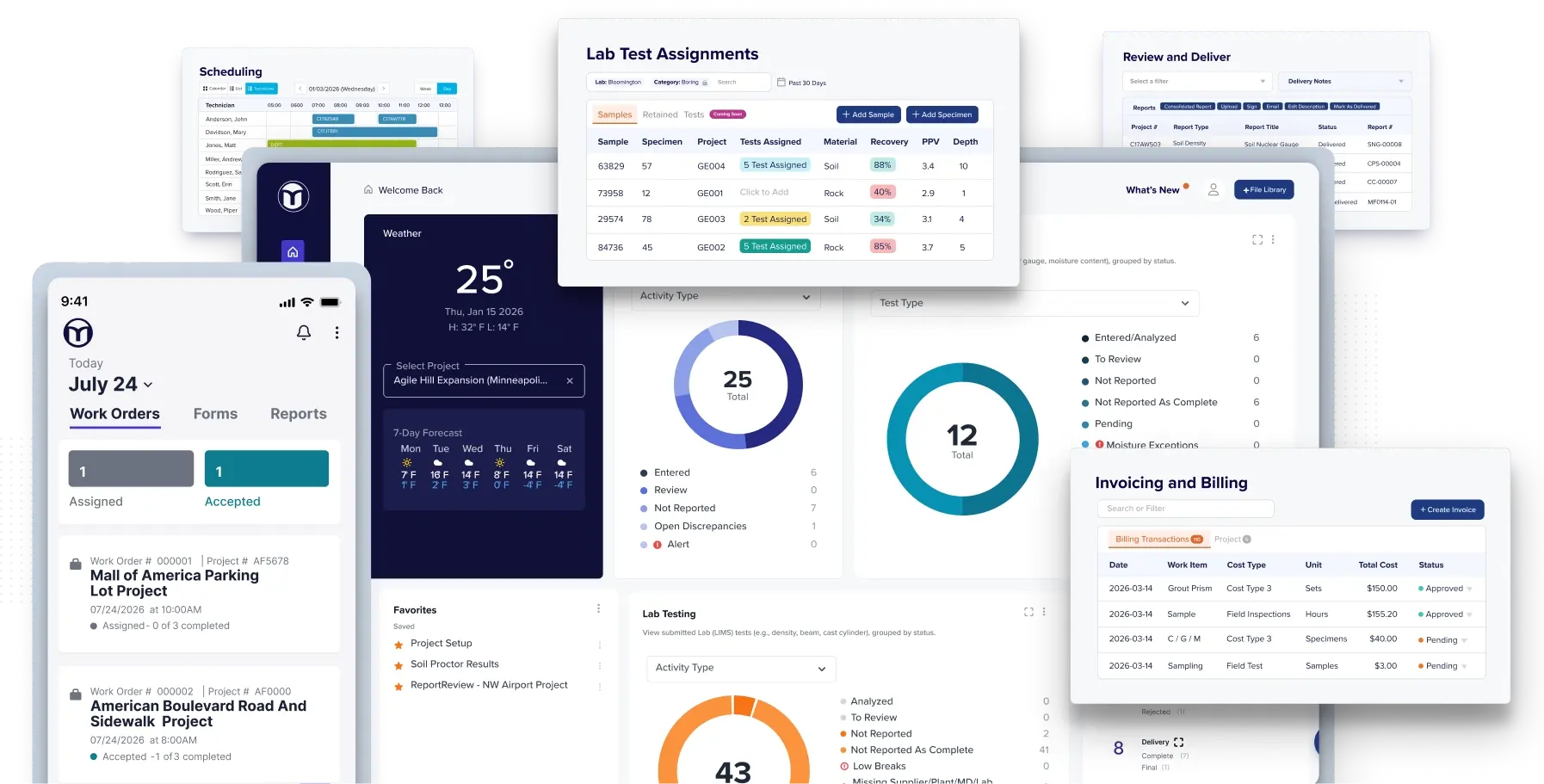
MetaField eliminates manual handoffs by creating a single digital workflow from field data capture through lab testing.

Field data is captured once in a structured, standardized format and automatically shared with the lab. That data directly drives downstream workflows without re-entry or interpretation.

Key capabilities include:

  • Single-source data capture that becomes the system of record
  • Automatic transfer of sample information from field to lab
  • Built-in accuracy through required fields and validations
  • Workflow automation triggered by field activity

By removing the human handoff between systems, MetaField eliminates delays, reduces errors, and improves confidence in results.

Why Is MetaField Considered the Industry Standard for Field-to-Lab Workflows?

Mbased testing, regulatory requirements, and the need for speed and accuracy across teams.

For more than a decade, CMT and geotechnical firms have relied on MetaField to:

  • Improve operational efficiency without sacrificing data quality
  • Scale field and lab operations with confidence
  • Reduce risk associated with manual, error-prone processes
  • Deliver faster, more reliable results to clients

By connecting field data capture directly to lab workflows, MetaField turns disconnected steps into a continuous process firms can trust as they grow.

FAQS

MetaField eliminates manual handoffs by capturing structured field data once and automatically using it to drive lab intake, testing, and reporting workflows. This removes the need for paper tickets, spreadsheets, emails, or manual data re-entry.

No. Firms of all sizes benefit from eliminating manual handoffs. Smaller firms often see immediate gains in efficiency and accuracy, while larger firms gain scalability and consistency across teams.

Yes. MetaField integrates into established field and lab operations. It removes manual handoffs without forcing teams to change how testing is performed, allowing firms to modernize workflows while maintaining operational continuity.

See how MetaField eliminates manual data handoffs by capturing field data once and automatically driving lab workflows from start to finish.

Previous Blog PostNext Blog Post